The Genius Act

The U.S. Treasury is likely to need to borrow approximately $15 trillion over the next decade. As incredible as that seems, the U.S. Treasury cares about the price of that debt, and therefore, since they are the seller, they need to attract as many buyers as possible to keep the cost of that debt as low as possible. Basic supply and demand at work. Reliable treasury bond buyers are pulling back, primarily China and, to a certain degree, Japan. The Genius Act permits private entities to issue their own stablecoins, provided they are fully backed by U.S. treasuries. That will open up a new set of investors for the U.S. Treasury as it issues its required bonds. On the one hand, it’s an interesting solution because the Treasury can access an expanding market that exists outside the banking system. Expect to see much more international capital flows in US dollars, as well as significantly increased shadow banking among large US-based corporate entities that engage in business with each other and internationally.
China, the US, and the “Trap”

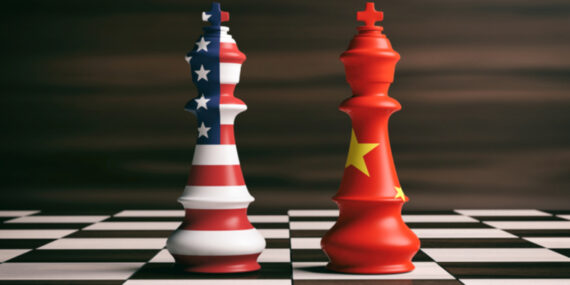
The “Thucydides Trap” occurs when a rising nation-state—for the Greek historian Thucydides, it was Athens—must eventually have a violent confrontation with the existing dominant nation-state—Sparta in his time. It is a zero-sum game where there can be only one dominant nation-state as the eventual winner, and it is usually assumed that the rising nation-state will outdo the dominant nation-state resolved only by military conflict.The United States and China are today’s Sparta and Athens. For several decades, their geopolitical relationship has been fundamentally based on collaboration and healthy competition, raising the bar for both countries. Now, it is turning into discordant competition, trade restrictions, and embargoes. The combined benefits of global collaboration and competitiveness, not trade restraint, will only enhance the benefits for the United States and China. The government creates friction and potential conflict, which is the biggest reason we fall into the Thucydides Trap. If appropriate, oversight, sensible regulation, and enforceable trade agreements do not interfere with fair competition and collaboration. There is no “Trap” to avoid. The sooner China and the US realize this, the better off each country (and the world) will be.

China’s Emerging AI

Significant VC activity and AI development opportunities are emerging in China. DeepSeek is the Vanguard of innovation from the artificial intelligence “moonshot” encouraged by the Chinese government. Not only will we see ongoing developments from Alibaba and Tencent, but there will also be a layer of elite AI companies at the forefront of China’s AI sector. US sanctions and restrictions have only increased innovation and groundbreaking AI development activity in China. Those sanctions will amount to nothing and encourage accelerated advancement.

China, Prosperity, and Free Markets

Chairman Xi faces more significant problems than just a declining stock market. Future prosperity, innovation, and China’s global position in advanced technologies are at stake. Bureaucratic regulation and central government money are not the answer, and an uncomfortable truth for communist bureaucrats is that a free market, access to venture capital and private equity, and vibrant public markets are essential for China’s success. A volatile market is still best at attributing value and allocating capital over time. China’s entrepreneurs have brilliance, incomparable fortitude, and a strong work ethic, but without capital and liquidity for that capital, the ship will run aground.

Permanent capital is essential for the growth of an economy, innovation, and prosperity. Liquidity is essential for that capital.

Artificial Intelligence: The Sharpened Rock

AI is a powerful tool under human direction, not an autonomous entity with consciousness or emotions. It examines artificial intelligence’s opportunities, limitations, and risks while giving a reality check to the hyperbole and fears.

The first and most crucial principle in understanding AI is recognizing its inherent nature as a tool, a creation of human ingenuity designed to augment, rather than replace, human intelligence. AI systems, at their core, are complex algorithms capable of processing and learning from data at a scale and speed unattainable by human cognition.
However, it is an unprecedented, powerful tool that can permeate every aspect of society, industry, and human ingenuity globally. Its impact can be equivalent to Prometheus giving humans the gift of fire.