Albert Camus’s warning from nearly 80 years ago, that humanity is subordinate to abstraction, people are replaced by calculations, and the willingness to accept suffering as an administrative variable persists. We have industrialized the human crisis. We are at an inflection point where the consequences of our choices, both good and bad, will arrive faster, hit harder, and spread more widely than any prior moment in history. We have the proven capacity to recover from previous crisis. The question is whether the next crises potentially makes recovery impossible.
The US’s competitive advantage was developing the world’s best educational system, initiating innovative research and development, welcoming the world’s best students to thrive in an unrestricted environment, and accessing unique forms of capital for entrepreneurial ideas. The unique environment that combined academia and entrepreneurship, as seen at places like Bell Labs and Fairchild Semiconductor, was the spark that ignited Silicon Valley, the Life Sciences Corridor, the Innovation District, and the Research Triangle, among others, creating an unprecedented entrepreneurial environment and economic engine. This drove economic growth, disruptive innovation, and greater prosperity. This created a virtuous cycle that enhanced national wealth and economic opportunity. We are undermining all these advantages. The next 20 years will be defined by choices made today. Talent, energy, and technological innovation build the foundation for prosperity. Undermine them, and you guarantee decline.
The sustainability of advanced technologies, unique manufacturing capabilities, global access, and robust supply chains is currently dependent on ill-defined, reckless, and volatile political and economic strategies. Ignoring the reality of the situation and hoping things will eventually work out isn’t a good plan. For decades, the world has relied on Taiwan Semiconductor (TSMC) to produce the most advanced chips, powering everything from smartphones to artificial intelligence. This dependence has created an unprecedented vulnerability: a single geopolitical flashpoint controls the lifeblood of the global digital economy. The challenges of advanced semiconductor technologies and manufacturing are among the most pressing and significant issues of this generation. The U.S. must acknowledge that a world dominated by a single supplier is unsustainable. It must invest not only in fabs but also in intellectual capital, allied coordination, and long-term technological leaps. There is no guarantee of success. The rivalry with China will intensify, and Taiwan will remain a flashpoint. But inaction is the greater risk. Hope may provide comfort, but only strategy, investment, and execution will ensure resilience. Hope is not a plan.
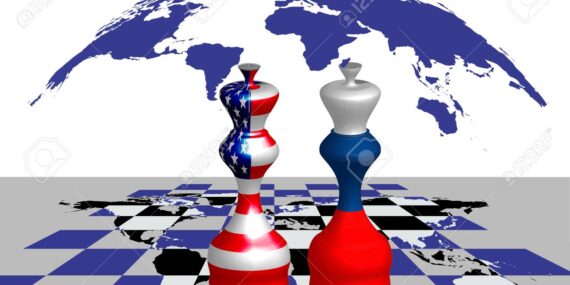
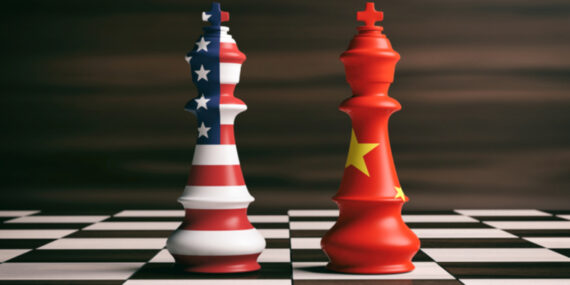
The United States and China play global economic and political chess games. There are numerous moves and defensive and offensive strategies, not only for trade but also for energy and natural resources (rare earths, among the most recent sources of discord), geopolitics (Russia, Ukraine, Iran, and the Middle East generally), technology (Taiwan and AI), and global economic supremacy. It’s a long list, but China and the US drive the outcomes. Let’s be clear, Apple designed the iPhone, but it was China’s manufacturing workforce that made it a global phenomenon. China’s millions of engineers and factory workers accumulate practical hands-on knowledge from experience that cannot be easily transferred. This sustainable advantage creates new industries, including electric vehicles, drones, and alternative energy, with world-leading expertise. In the meantime, America’s engineering expertise has been hollowed out. It is naïve to imagine wrestling China back to the past. The project, now, is to contest its moral vision of the future. Connected, collaborative engagement is the only practical way. China has come a long way, and its trajectory cannot be ignored or dismissed. The U.S. and China will be much better off from this more enlightened, realistic perspective.
The US is still ahead of China in artificial intelligence. However, perhaps the key to China’s success lies in its open-source model ecosystem, combined with aggressive development in semiconductor design and manufacturing. Our world is not static, and the world of artificial intelligence is where momentum matters. AI can potentially be transformative, and although current geopolitical rhetoric does not allow for cooperation or collaboration, AI progress and innovation are ultimately a global collaborative effort. If done correctly, it benefits many more and it does not come at the expense of any one nation. That should be the AI Action Plan.
A turbulent geopolitical and economic environment is here to stay. Allocating capital in today’s economic and geopolitical landscape requires a sharp focus on macro trends, a disciplined approach to risk, and an ability to anticipate shifts in policy and global power dynamics. The investment landscape has never been more complex, with heightened tensions between the U.S. and China, uncertainty surrounding Taiwan, and Europe’s economic fragility. The new reality is that trade realignments, subsidized industrial policies, and emerging trading blocs characterized by protectionism and localization are rising. Now What?Geopolitical risk is no longer an afterthought. The US-China rivalry, Taiwan’s strategic importance, Europe’s economic fragility, and shifting trade policies will shape the next decade of global markets. Savvy investors will anticipate these changes and allocate capital to industries and regions positioned for sustained growth. The key to success is flexibility, resilience, and the ability to recognize macro trends before they materialize fully. The future is uncertain but full of opportunities.
The United States and China play global economic and political chess games. There are many moves and defensive and offensive strategies, not only for trade but also for energy and natural resources (rare earths among the most recent flavors of discord), geopolitics (Russia, Ukraine, Iran, the Middle East generally), technology (Taiwan and AI), and global economic supremacy. It’s a long list, but China and the US drive the outcomes. Instead of working for mutual benefit, regardless of fundamental cultural and political differences, we are now drawing bright lines demarking battle zones (Ukraine and Russia; Taiwan; AI and advanced technologies). The result will be economic and technical inefficiency and degradation in the quality of life, safety, and prosperity. China must acknowledge the outrage caused by its overreaching bids for control, and America must adjust to China’s presence without selling honor for profit. Competition is not us-or-them; reality is us-and-them. The U.S. semiconductor industry gets 30% of its revenue from China. China’s resulting products service the world, and China’s producers need the U.S. as well. If allowed, such examples of mutual benefit will proliferate.
It is naïve to imagine wrestling China back to the past. The project, now, is to contest its moral vision of the future. Connected, collaborative engagement is the only practical way. China has come a long way, and its trajectory cannot be ignored or dismissed. The U.S. and China will be much better off from this more enlightened, realistic perspective. See the whole board.
The “Thucydides Trap” occurs when a rising nation-state—for the Greek historian Thucydides, it was Athens—must eventually have a violent confrontation with the existing dominant nation-state—Sparta in his time. It is a zero-sum game where there can be only one dominant nation-state as the eventual winner, and it is usually assumed that the rising nation-state will outdo the dominant nation-state resolved only by military conflict.The United States and China are today’s Sparta and Athens. For several decades, their geopolitical relationship has been fundamentally based on collaboration and healthy competition, raising the bar for both countries. Now, it is turning into discordant competition, trade restrictions, and embargoes. The combined benefits of global collaboration and competitiveness, not trade restraint, will only enhance the benefits for the United States and China. The government creates friction and potential conflict, which is the biggest reason we fall into the Thucydides Trap. If appropriate, oversight, sensible regulation, and enforceable trade agreements do not interfere with fair competition and collaboration. There is no “Trap” to avoid. The sooner China and the US realize this, the better off each country (and the world) will be.
Significant VC activity and AI development opportunities are emerging in China. DeepSeek is the Vanguard of innovation from the artificial intelligence “moonshot” encouraged by the Chinese government. Not only will we see ongoing developments from Alibaba and Tencent, but there will also be a layer of elite AI companies at the forefront of China’s AI sector. US sanctions and restrictions have only increased innovation and groundbreaking AI development activity in China. Those sanctions will amount to nothing and encourage accelerated advancement.
The announcement of a $500 billion commitment to building AI infrastructure in the United States, is another major salvo in the AI wars. At this point, it’s hard to distinguish whether this is just hyperbole from hyperventilating technology executives or something with real substance.But, more importantly, it indicates an agenda to “win” in artificial intelligence. OpenAI, Softbank, and others are pushing the narrative to “beat China” and align themselves with the Trump administration. Fundamental is a belief that such a race exists, the US can gain advantage by dedicating computer resources, and it’s worth winning at all costs – whatever that means.Unfortunately, computer resources don’t define a sustainable advantage anymore. A decoupling of resources and cooperation between the United States and China have forced the Chinese to develop near-equivalent models while using only a fraction of resources. bigger data centers, substantial computing resources, and overwhelming numbers of GPU production won’t win this arms race. It’s A Zero-Sum Game That Amounts to Nothing.