
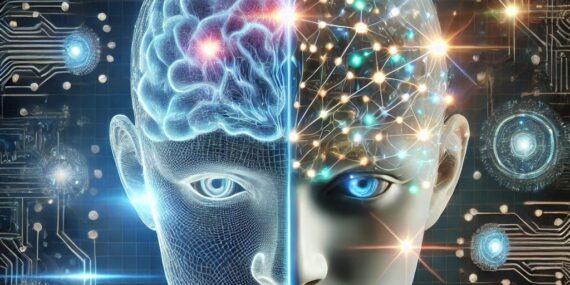
AI and Human Intelligence

The future of AI will be systems that enter an environment, build memories, recognize gaps, ask questions, conduct experiments, model consequences, learn from people, and revise themselves under controlled conditions.
AI will become an experiential learning tool. This transition would reduce dependence on internet-scale data, redistribute competitive advantage, accelerate robotics and autonomous science, strengthen specialized and sovereign AI, and create entirely new governance challenges.
The next great advance in artificial intelligence may not be a machine trained on everything. It may be a machine that knows how to learn what matters.
The Application Layer

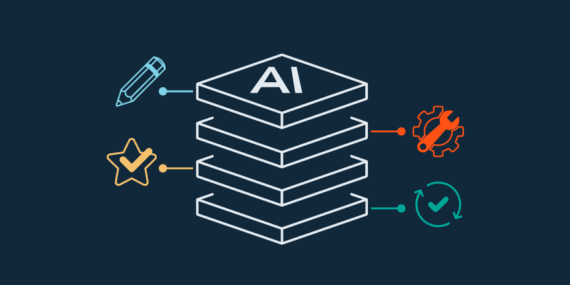
Artificial intelligence is a stack: energy, silicon, cloud, models, and applications. Each has its own economics, competitive dynamics, and challenges. Mistaking one layer for the whole industry causes confusion, misrepresentation, bad decisions, and misguided capital allocations. The infrastructure builders enable the platform; the application builders capture the value. The question is now, what value does all this deliver? Energy, silicon, cloud, and models only serve to deliver that product. There is a robust argument that we are at the beginning of an unprecedented value-creation curve. Built on the infrastructure and services provided by the other layers of the stack, the AI application layer will be globally transformative and disruptive. The constraints are imagination, execution, and the willingness to rebuild how work is done.