Blame Prometheus

As the era of artificial intelligence is here, it’s easy to fall into the trap of despair and fear over the loss of control and the worry that artificial intelligence is about to unleash killer robots and enslave humanity. Either that, or Artificial intelligence will improve lives, expand access to education, advance healthcare, and advance climate science, among many other improvements. Luckily, AI’s benefits greatly outweigh its costs. Nothing is free, and everything comes with a price (there are always both sides to the ledger), but the extraordinary benefits that artificial intelligence can unleash are worth the effort. It would be a mistake to slow down, pause, or restrict research, development, and AI applications. AI will not destroy the world — and it is more likely to save it.

The Failure of Simplicity

Markets destroy the comfortable assumption that tomorrow behaves like yesterday. They reward those who can identify when the system’s structure changes and punish those who try to fit new realities into old frameworks.

That is why the conventional idea of “what something is worth” has become less relevant than how systems evolve. Investors who cling to formulas intended for stable conditions will always be surprised by nonlinear disruption.

Nowhere is this more obvious than in AI and energy, where the variables are not just changing; the equations themselves are being rewritten.

Innovation, Competitiveness, and a Fractured World

The US’s competitive advantage was developing the world’s best educational system, initiating innovative research and development, welcoming the world’s best students to thrive in an unrestricted environment, and accessing unique forms of capital for entrepreneurial ideas. The unique environment that combined academia and entrepreneurship, as seen at places like Bell Labs and Fairchild Semiconductor, was the spark that ignited Silicon Valley, the Life Sciences Corridor, the Innovation District, and the Research Triangle, among others, creating an unprecedented entrepreneurial environment and economic engine. This drove economic growth, disruptive innovation, and greater prosperity. This created a virtuous cycle that enhanced national wealth and economic opportunity. We are undermining all these advantages. The next 20 years will be defined by choices made today. Talent, energy, and technological innovation build the foundation for prosperity. Undermine them, and you guarantee decline.

New Energy Innovation

A new generation of clean, reliable, and flexible energy technologies, including geothermal and advanced nuclear energy, is emerging. The story is no longer about clean and renewable energy. Solar and wind have their place, but capital investment and policy incentives are now focused on reliable, low-cost, controllable, domestic energy. For the first time in years, the policy, market, and demand signals are aligned in favor of a portfolio of solutions that are testing the edges of technology and are no longer narrow niches.

A Solution and a Sideshow

Innovation is unpredictable and astonishing – it can address the world’s most critical issues today, from hunger to efficient energy, to devastating diseases. It is also too often misguided, inefficient, and meaningless – creating nothing more than distractions and wastes of time cloaked in an image of technological wonder. Misguided and manipulative business plans sit side-by-side with the groundbreaking disruptions that may address society’s greatest problems.

Sweltering, Chills, and Discontent

Sweltering, Chills, and Discontent

While most of Europe and the United States suffer sweltering heat, darkening economic skies and bitter winter of discontent are looming. Threats to the world economy are chilling. Rising interest rates are slowing activity for discretionary spending while rising prices for nondiscretionary spending are also slowing economic activity. It would be miraculous if the compounding of both effects would not lead to a recession in both Europe and the US. China’s growth has stalled. The Ukraine conflict will resolve itself to the West’s dramatic disadvantage and the West seems to be willing to let it happen – much to each economy’s long-term disadvantage. Don’t count on anything miraculous.

Commodities

Commodities and Crisis

Beyond 2022, higher interest rates and slower global growth most likely trigger a market correction, perhaps at an exorbitant cost. As discounts rates rise and growth assumptions lower, many stocks based assumptions that low interest rates and high growth would sustain for many years will see dramatic repricing and much lower valuations.
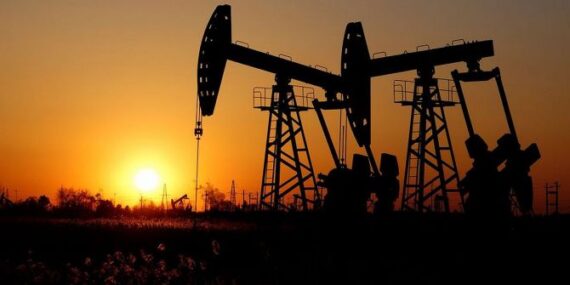
Energy and commodities, and the businesses associated with them, are in for a very bumpy ride, but there is a fundamental sustainability to their cash flow and long-term attractiveness as world supply reorders. That which is essential prevails.
The luxury of thinking we have halcyon days of global growth and geopolitical stability may not be with us for some time to come. It is perhaps time to plan for that now.