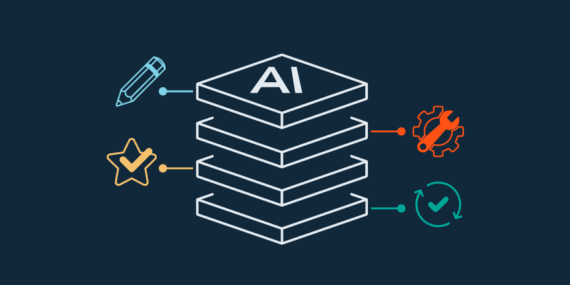

Reimagining Software

Software Is the central nervous system of the global economy and its demise is greatly exaggerated. There’s a growing narrative thatsoftware is becoming commoditized. Large language models write code. Autonomous agents assemble applications. The barriers to building digital products appear to be collapsing. If software can be generated instantly, then software itself must be losing value.
This conclusion fundamentally misunderstands how technological disruptions develop and expand. Software is becoming the infrastructure layer of modern civilization. The economic, industrial, and geopolitical systems being constructed over the next three decades will not run on software. They will run as software.

The Failure of Simplicity

Markets destroy the comfortable assumption that tomorrow behaves like yesterday. They reward those who can identify when the system’s structure changes and punish those who try to fit new realities into old frameworks.

That is why the conventional idea of “what something is worth” has become less relevant than how systems evolve. Investors who cling to formulas intended for stable conditions will always be surprised by nonlinear disruption.

Nowhere is this more obvious than in AI and energy, where the variables are not just changing; the equations themselves are being rewritten.

New Energy Innovation

A new generation of clean, reliable, and flexible energy technologies, including geothermal and advanced nuclear energy, is emerging. The story is no longer about clean and renewable energy. Solar and wind have their place, but capital investment and policy incentives are now focused on reliable, low-cost, controllable, domestic energy. For the first time in years, the policy, market, and demand signals are aligned in favor of a portfolio of solutions that are testing the edges of technology and are no longer narrow niches.