Think Differently and Better

Think Differently and Better

The market is consensus thinking. Performing above average means being different. Simply being different doesn’t define success. Success means understanding what it takes to not only think differently but understand when consensus thinking is wrong and executing and implementing those choices effectively. Doing better (generating superior returns with less overall risk) is difficult. Understanding “what’s really going on” is not a simple formula. It requires different, deeper, and better thinking. Depart from the investment crowd, focus on the factors that are necessary and, in combination, sufficient to make a difference, sustain performance and manage risk. It’s not easy or obvious, but it is superior.

Volatility and Uncertainty

Where Does the Market Go from Here?

The illusion that one can either predict or get ahead of cycles, or predict when they will end is why most investors underperform the market. Markets are driven by human emotion, and it is human emotion combined with the supply and demand dynamic that determines price. Therefore, pricing is independent of anyone’s perspective about “intrinsic value.” Markets are based on price, price is based on supply and demand, and that dynamic is subject to abrupt changes based on the whims of small numbers, and sometimes exceptionally large numbers, of investors. Human behavior controls the markets. Optimism, pessimism, psychology, fear, conviction, and resignation all play a role in adding to volatility and uncertainty. Frequent and intense volatility is here to stay. Market movements really can’t be predicted unless they are at extremes when prices are at absurd highs or lows. But, picking the high or the low is a fool’s errand. Understanding and profiting from volatility, managing risk, and believing in a sustainable investment model is still the best strategy.

Disruption and Nonsense

Disruption and Nonsense

Transformation, or euphemistically, “disruption,” creates great opportunities to capture newly created wealth. But, as industries are transforming and strategic disruption is occurring, quite a lot of absurdity and certainly enough terror are associated with some of these extraordinary opportunities to require much greater analysis and understanding. There are extraordinary risks associated with anything disruptive and transformational. The first disruptor isn’t always the one who creates the most value or is even a sustainable competitive entity. Innovation does not mean competitive sustainability. Digital platforms, ranging from the internet to digital assets and cryptocurrency are transforming industries globally. But, along with that comes a lot of hyperbole and typically that is followed by very little substance. Great companies use technological disruption, innovation, and transformation to establish themselves and thrive. But they rarely last. Every company, even the most valuable companies such as Apple, Apple, Amazon, Facebook, Netflix, etc. must dynamically transform to stay competitive and valuable. Transformations are certain. New entities will become very valuable, legacy companies will diminish, and a handful will transform and thrive. Transformation and sustainability create and capture great wealth, but are far more challenging to identify, and even more challenging to sustain.

Arcadia Capital

Podcast Channel

The show analyzes emerging economic and social developments, identifying the most critical issues impacting investment success. It looks at globally disruptive changes and strategies to profit from these new market forces. Innovation, advanced technologies, geopolitics, and new interrelated factors are essential components of future investment success. Investment success combines predicting the future, the confidence to make bold choices, and the fortitude to stay with those choices. Today’s volatile and uncertain world requires new knowledge and perspective and assembling relevant facts from many diverse sources to make better decisions and achieve superior returns. Some of the world’s most important industries are being profoundly impacted by new technological innovations and platforms, such as artificial intelligence, digital assets, blockchain-based businesses, gene editing, and DNA sequencing, enabling unprecedented disruption to business and economic models. Stable predictability is increasingly anachronistic. Every company or industry will either be a disrupter or disrupted. The leading growth companies of today stand an excellent chance to be memories tomorrow.

Irrationality, Exuberance, and Bad Decisions

Irrationality, Exuberance, and Bad Decisions

The world may appear to be a rational, deductive place if you are a scientist. But not if you are an investor attempting to understand how markets work. Financial markets are human creations, and humans are irrational. Economics, a truly dismal social science, is an attempt to look backward and create explanatory algorithms about what happened and why. They may have some success with this. But as predictive models, they are mostly useless. More often, they destroy value versus conveying any understanding about economic and business functions, and therefore, give not only useless but awful and typically value-destroying predictions. Participating in the markets requires a broader, more methodical and disciplined approach. Since irrationality pervades most activity, markets move dramatically with uncertainty, and investors react with dramatic moves based on even more uncertainty and lack a reasonable level of understanding and longer-term perspective about what is going on. The world now is more dynamic, volatile, uncertain, and unpredictable. Irrationality drives most market decisions and rising above the noise to be more thoughtful, think deeply and slowly to understand what’s going on, and identify the handful of factors (typically very few) that make all the difference to investment success is the true challenge we face today. That challenge takes work and thoughtful strategies in our irrational world. That world will remain fundamentally irrational from now on, and thoughtful strategies are the only way to succeed in this irrational environment.

The Crypto Revolution

The Crypto Revolution

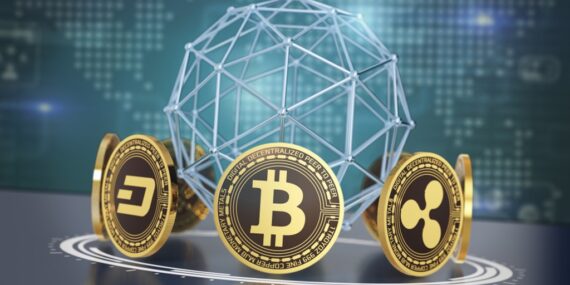
Super lofty ideas get attention and publicity, but they are not real. Narrow, specific applications are where true foundational value is created. The financial revolution will certainly not be based on a process where someone buys coins or tokens and simply waits for them to increase in value. On top of that, despite the belief that there will be frictionless peer-to-peer transactions, purchasing any cryptocurrency requires a crypto exchange like Coinbase or FTX that charge high trading fees and have questionable security. Blockchain is an evolution for businesses, it is not a disruption or a new infrastructure. It will improve user experiences, regulatory clarity, and interoperability. Crypto proved that digital transfers and settlements were possible, it is the blockchain platform that enables this efficiently and securely. It may be boring and we’re not going to have any stadiums or arenas named after a technology platform, but real change will be driven by a blockchain. The rest is a noisy sideshow.

Uncertainty

Too Clever by Half

Investment models that account for uncertainty, volatility, and failure succeed in the long term. Events in Ukraine, oil and natural gas markets, commodities, supply chain disruption, and spiking inflation highlight that, while none of these were predictable, all represent increasing uncertainty permeating all markets. The pandemic and war in Ukraine were unforeseen, but that’s just the point, unforeseen events will occur. It is a waste of time to try to predict the specifics, it is an essential investment strategy to manage risk to not only withstand but profit from “certain uncertainty.” Irrationality, not only in human behavior (with unfortunate, often tragic results) but market movements, investment volatility, and bewildering prices, is another certainty. “Mr. Market” as Benjamin Graham said, “is an irrational schizophrenic.” Investing as if he is not assures an investment strategy that will ultimately fail. An increasing number of growth and momentum investment funds are shutting down after sustaining significant losses recently, a sign of the severe pain the selloff in growth stocks is inflicting. More importantly, it signals an inability for investment funds to manage risk and understand that markets and investments do not move in a singular direction for long, and the correction is sudden and painful – regardless of how compelling “momentum” may seem. Risk management is the key to investment sustainability, but this seems to go ignored among most investment professionals. Frequent and extreme volatility is here to stay, and that is likely to decimate growth and momentum funds, as well as highly leveraged equity investment funds (from LTCM in 1998 to Archegos in 2021, the lesson is never learned for long – and there will be more examples to come). Clear and coherent markets, free from political agenda, bad compromises, and ineffective regulation are almost nonexistent. The consequences continue to be pyrotechnic.

Deepmind

Artificial Intelligence and Transformation

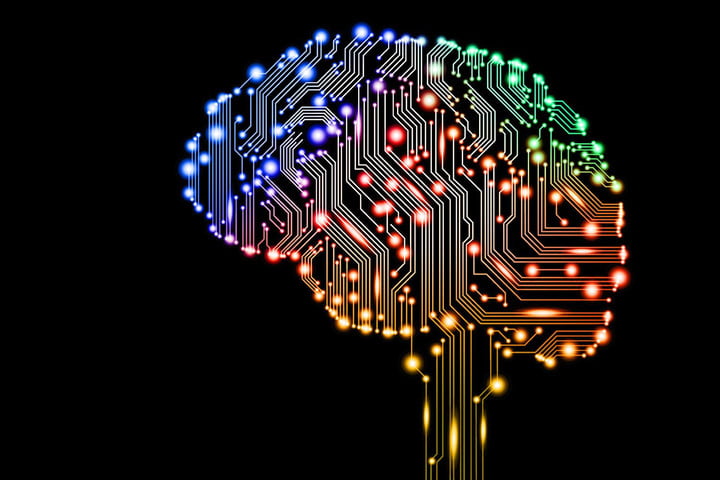
Artificial intelligence, while generating powerful tools for analysis, is only the beginning of a more ambitious phase making AI systems more accurate, less biased, and effective prediction tools. Gathering more and more raw data does not create value. One cannot simply push a button and have valuable output generated. Data needs to be collected, processed, stored, managed, analyzed, and visualized – only then can we begin to interpret the results. Each step is challenging, and every step in this cycle requires massive amounts of work and value-added tools. It’s not just the software and hardware artifacts we produce that will be physically present everywhere and touch our lives all the time, it will be the computational concepts we use to approach and solve problems, manage our daily lives, and communicate and interact with other people. It will be a reality when it is so integral to our lives it disappears. The problems and solutions we address are limited only by our own curiosity and creativity.

Web 3.0 Dreams and Reality

Web 3.0 Dreams and Reality

Every industry consolidates to a handful of centralized competitors. That will never change regardless of current dreams of decentralization from Web 3.0. Modern computing is a constant struggle between decentralization and centralization. Centralization wins eventually, and it will again. These dynamics, combined with the latest crash that may cool investors’ appetite for all things crypto, suggest that Web 3.0 will not dislodge Web 2.0. Instead, the future may belong to a mix of the two, with Web 3.0 occupying certain niches. Whether or not people keep splurging on NFTs, such tokens make a lot of sense in the metaverse, where they could be used to track ownership of digital objects and move them from one virtual world to another. Web 3.0 may also play a role in the creator economy, assuring intellectual property ownership. NFTs make it easier for creators of online content to make money. In this limited way, at least, even the masters of Web 2.0 see the writing on the wall: on January 20th both Meta and Twitter integrated NFTs into their platforms.

Learning

Remembrance of Things Past – Liquidity, Stability, and Predictability

Financial markets are imbalanced and lack liquidity in crucial sectors, even historically stable and predictable markets such as the global bond and currency markets. Investments are slanted in one direction more frequently and the markets are vulnerable to big price swings as a result. These large global markets are not immune to ever more lopsided trades creating extreme volatility. This occurs even when a small change occurs in positions, sentiment, or news. Even the world’s most liquid markets, US dollar currency trades and US Treasuries, are seeing skewed positioning resulting in surprisingly large shifts in prices and Treasury bond yields.

The market now leans too far one way or the other, and that imbalance will be forced to reverse more powerfully and unpredictably.