There are warning signs that the stock market is transitioning from some form of reality to misguided euphoria. The S&P 500 is up almost 10% in the last 30 days. However, this broad optimism doesn’t seem to be matched by many forms of fundamental reality.
Earnings are barely moving, and profit margins are under pressure from higher wages and rising product costs. However transitory one imagines supply chain constraints and lack of available workers, the situation has certainly extended much further than most predicted.
Central bank independence and fiscal responsibility matter, even though the Western world is acting as if these rules no longer apply. Well, perhaps. But the world has given us three examples where the consequences are extreme when these basic foundations of economic policy are ignored or violated.
Failures are essential for success. The NASA flight director, Gene Kranz, who is famous for the Apollo 13 quote, “Failure is not an option” has been misunderstood. Mr. Kranz did not mean “don’t fail.” He meant was that there will be a solution, think boldly and courageously because, while the solution may not be obvious to you now, you will find it eventually.
Accepting failures is not accepting failure.
Failures – trial and error, unforeseen roadblocks, creative thinking, visions, and revisions that a minute will reverse – lead to insight, innovation, creativity, and unforeseen breakthroughs. That’s success.
Decentralized finance (DeFi) can disrupt global finance – but only if Defi systems and central governments cooperate. Yes, sworn enemies cooperating for the greater good.
While each seems to be the sworn enemy of the other, ultimately, a cooperative relationship between decentralized and efficient (versus anachronistic and cumbersome) financial infrastructure and government central banks with stable currencies is absolutely necessary.
Defi transactions, to scale globally, require stable and predictable value. Government-issued currencies are the only reliable and foreseeable foundation. Cryptocurrencies, such as Bitcoin were never currencies. They are a sideshow that will remain a speculative asset, and increasingly unimportant.
Cryptocurrencies represent an architectural shift in how financial infrastructure and technology interact, and therefore, it is disrupting how the financial industry works globally. It is neither a new kind of money system nor a danger to economic stability. It is more important than that.
Distinguishing what’s happening in the market and the direction of important market metrics – the signal – from garbled, inconsistent, and mostly useless data – the noise – is extremely challenging today. Information is contradictory and transient making data and critical events more confusing and indistinguishable. Unusual circumstances brought about by the pandemic, subsequent supply chain interruptions, inconsistent production and demand, and unclear economic forecasts combined for almost unprecedented uncertainty and unpredictability.
Typically, near-term predictions are reasonable and reliable because we have immediately available and fairly accurate data making short-term predictions reasonably accurate. In other words, we can estimate what will happen because we have a good idea what just happened. But this is not the case today. Predictions based on the near-term past are more muddled now than ever. While we used to be able to say we can see a trend, whether that’s inflation, economic growth, or some other important metric, too much volatility, irrelevance, and lack of applicability (after all, who is going to project from a base that includes a pandemic impacting global supply chains and production?), we really can’t reasonably rely on any of that data to try to find a trend or connect the dots generating a near-term forecast with any meaningful depth of data and understanding
More intense volatility occurring more often will be characteristic of this market from now on. An investment strategy must withstand and profit from this. The only clear signal from the market is that there is far too much noise and not enough of a clear signal. Without clarity, determining an investment strategy is flying blind with no instruments.
Core holdings combined with an ability to withstand and profit from volatility and unpredictability are essential for investors today.
Assume nothing, new models and analytical tools, coupled with constant revision, questioning everything, reassessing, and re-analyzing, are essential to success in today’s markets. Often, and we are seeing that in today’s market, relying on bad assumptions, dogma, or prior belief can be disastrous.
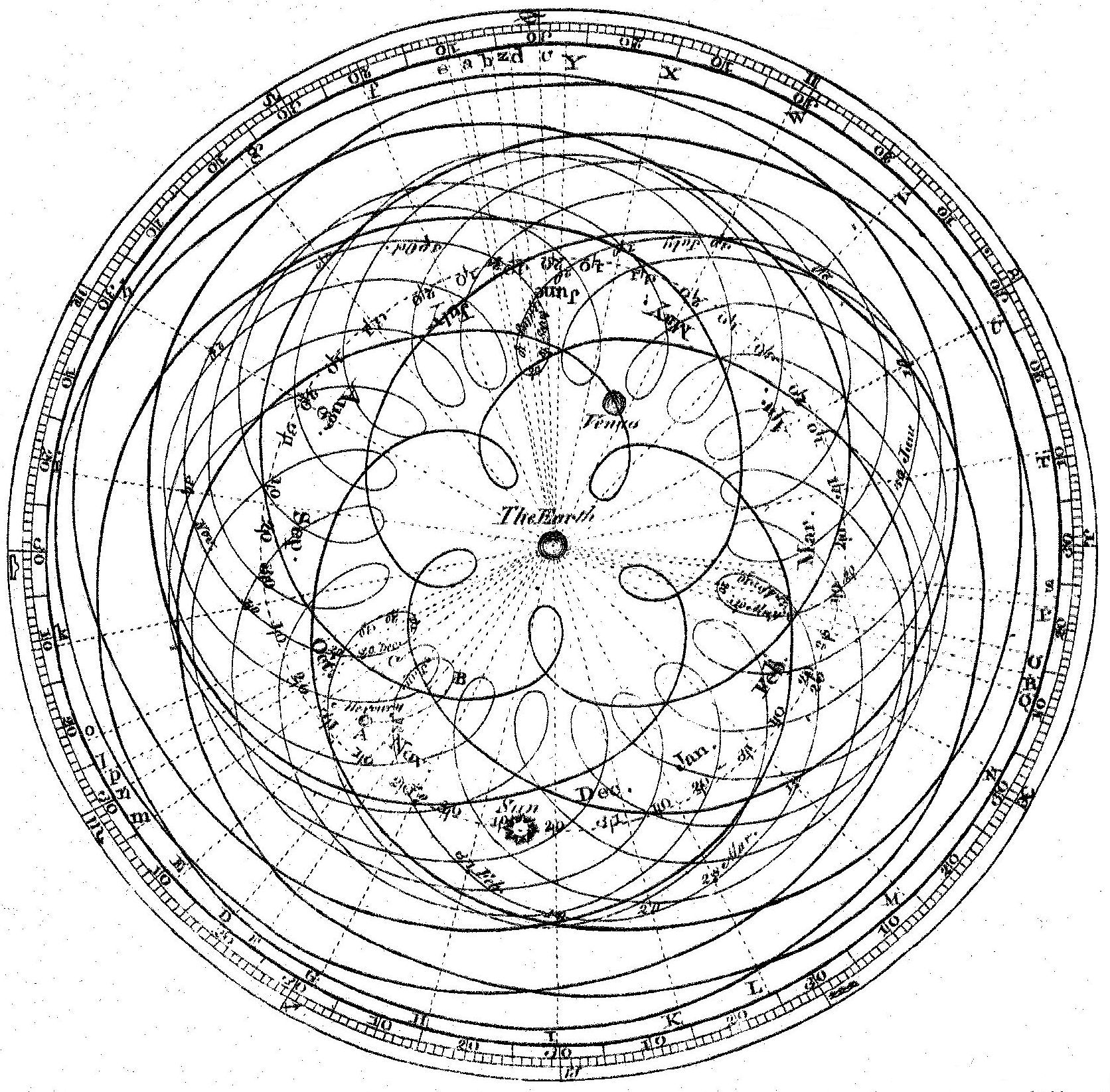
This story about medieval astronomy applies directly to investment strategies, market valuations, and portfolio construction today. It’s the same lesson –begin by questioning the very assumptions on which an entire system is built. There is also a very specific application of this model that is particularly current.
One of the most valuable lessons is to assume no knowledge and analyze closely every initial assumption. Nothing is so obvious that it can’t be questioned. Unexamined ideas and assumptions will eventually be useless. Any assumptions and any model used to explain and predict anything (whether it’s the movement of planets or financial markets) needs to go back to first principles and discard any assumptions, preconceived knowledge, or bias.
Technology is facing a substantial crossroads as policy changes with global resonance, such as China’s new crackdown on the country’s big tech companies (such as Ant Financial and Didi Global), the rising resistance to social media behemoths like Facebook, and the need for governments, whether in the United States, Western Europe, or China, to manage and control technological development. Regardless of any good intentions, this will add friction, inefficiency, and underperformance to the most dynamic global industry. The best intentions usually bring disastrous consequences. China cannot escape the law of unintended consequences. Trying to “manage” innovation and creativity takes away the often unplanned and serendipitous breakthroughs that make many significant advancements possible in the first place. From an economic perspective, capital is not going to invest in an uncertain environment where prosperity is managed and, despite great risk where most ventures will fail, the truly successful ones which make up for the losses and encourage capital to keep investing, will be mitigated. The vanguard of capital flight from China is beginning, and it will not ease if this policy and attitude are not revised. This attempt at “fairness and more equal distribution” will do nothing more than keep capital away and stifle any attempt at creativity, technical innovation, and economic advancement. The intention of this policy will yield the opposite outcome as a consequence. The signal means substance. Substance means innovation, creativity, and competitive dynamics that create the most effective innovations, the best solutions, and the most sustainable companies. Central planning, bureaucratic industrial policy, government-led economic management, and dictatorial focus have always failed, and always will. The US should not fall into this trap, regardless of how appealing it may be.
Separating signal versus noise is challenging these days because today’s signal is more muddled than ever. One of the more unusual circumstances, which I covered in more detail in the article “Important and Unknowable” is that the immediate past is telling us extraordinarily little about the near future. That is unusual because we can typically…
Economic predictions have always been highly variable and uncertain, and, for some reason, relied upon as if the future were a magical algorithm. Essentially, economists would make one fundamental mistake. They thought they were practicing a science. Data could be collected, inputted, and a predictive algorithm could be generated. Even Nobel Prize winners like Paul Samuelson believed that with enough data we could come to understand the economy and how it functioned.
This is nonsense. As Daniel Kahneman and Amos Tversky have shown us, human behavior and irrationality, combined with unpredictability and randomness (thank you Naseem Taleb) make this even a questionable social science. Using existing analysis and algorithms to reliably forecast is a fool’s errand, essential for someone’s tenure, and maybe even a Nobel Prize, but doesn’t add much that is useful. Some of the more laughable Nobel Prizes have been given to people who determined that markets were efficient. They are not. Economies can be predicted with useful data input. They cannot. A couple of inputs about inflation and the unemployment rate, and we know how to manage an economy. We can’t. That last one is the Philip’s Curve – true for a limited time and then it goes spectacularly wrong – a lot like most risk and market prediction models.
Cryptocurrencies Hit New Highs. Should we be terrified?
Probably.
Bitcoin, Ether and, the most recent joke, frenzy, and punch line, Dogecoin, have increased 10x to 20x over the last 12 months. A spectacular return, but can it last?
Probably not.
The forces driving the eye-watering returns are the same as those that drove the insanity behind GameStop: the equivalent of a trading floor in every pocket funded with excess cash looking for disruptive investment opportunities and charging forward like an out of control herd – or lemmings – however you want to envision it. Cryptocurrency became the overwhelming target of Reddit day traders and mobs. Social media influencers, led by various forms of PT Barnum imitators like Elon Musk and many less sophisticated contributors, combined with the public listing of Coinbase to create a massive rally.