Arcadia Capital

Podcast Channel

The show analyzes emerging economic and social developments, identifying the most critical issues impacting investment success. It looks at globally disruptive changes and strategies to profit from these new market forces. Innovation, advanced technologies, geopolitics, and new interrelated factors are essential components of future investment success. Investment success combines predicting the future, the confidence to make bold choices, and the fortitude to stay with those choices. Today’s volatile and uncertain world requires new knowledge and perspective and assembling relevant facts from many diverse sources to make better decisions and achieve superior returns. Some of the world’s most important industries are being profoundly impacted by new technological innovations and platforms, such as artificial intelligence, digital assets, blockchain-based businesses, gene editing, and DNA sequencing, enabling unprecedented disruption to business and economic models. Stable predictability is increasingly anachronistic. Every company or industry will either be a disrupter or disrupted. The leading growth companies of today stand an excellent chance to be memories tomorrow.


Web 3.0 Dreams and Reality

Web 3.0 Dreams and Reality

Every industry consolidates to a handful of centralized competitors. That will never change regardless of current dreams of decentralization from Web 3.0. Modern computing is a constant struggle between decentralization and centralization. Centralization wins eventually, and it will again. These dynamics, combined with the latest crash that may cool investors’ appetite for all things crypto, suggest that Web 3.0 will not dislodge Web 2.0. Instead, the future may belong to a mix of the two, with Web 3.0 occupying certain niches. Whether or not people keep splurging on NFTs, such tokens make a lot of sense in the metaverse, where they could be used to track ownership of digital objects and move them from one virtual world to another. Web 3.0 may also play a role in the creator economy, assuring intellectual property ownership. NFTs make it easier for creators of online content to make money. In this limited way, at least, even the masters of Web 2.0 see the writing on the wall: on January 20th both Meta and Twitter integrated NFTs into their platforms.

Digital Assets

Digital Assets – Technology of Freedom?

Digital assets are disrupting finance – the world’s largest industry. All assets, intellectual property, and even currency can now be digitized, and anyone can access anything from anywhere. The finance industry is being this intermediated and globalized, economic development and policy will be forever changed.

Time

A Few Simple Conclusions on a Few Simple Topics

Transformation, Valuation, Employment, and Deflation

Disruption to some of the world’s most important industries, deflationary pressure caused by scaling lower-cost businesses, and sustained low interest rates challenge traditional valuation models. Technological platforms, from blockchain-based businesses to energy storage to DNA sequencing, enable unprecedented disruption to business and economic models.

Interest rates will remain low, equity values will remain high, innovation will drive deflationary pressure, and volatility will be intense and frequent. A new approach is required to understand dynamic global competition and sustainable value.

Misery

When up is down

Investors expected that the Fed would not only end its bond buying program, but many believed it would also raise interest rates. While the Fed did agree to taper its bond buying, essentially decreasing its $150 billion monthly bond buying program by $15 billion per month, ending the program in 2022. However, the Fed kept interest rates the same and clearly signaled that it would not raise interest rates anytime soon, and almost definitely not until the taper of its bond buying was completed – in other words, not for at least one more year.

Investors who had been betting on the Fed raising interest rates wagered on the yield curve flattening for Treasuries. Therefore, they invested in short-term Treasuries believing those would outperform longer-term Treasuries, as well as 10-year and 30-year bonds. Instead, we are seeing the opposite happen. Short-term bonds are dropping in price and yields are approaching their highest levels since March 2020. Meanwhile, prices for long-term bonds have climbed. This same phenomenon is happening for government bonds that only in the United States, but also in the UK, Canada, and elsewhere.

Up and Down

Reality, Euphoria, and the Market

There are warning signs that the stock market is transitioning from some form of reality to misguided euphoria. The S&P 500 is up almost 10% in the last 30 days. However, this broad optimism doesn’t seem to be matched by many forms of fundamental reality.

Earnings are barely moving, and profit margins are under pressure from higher wages and rising product costs. However transitory one imagines supply chain constraints and lack of available workers, the situation has certainly extended much further than most predicted.

Inflation

Lessons on inflation

Central bank independence and fiscal responsibility matter, even though the Western world is acting as if these rules no longer apply. Well, perhaps. But the world has given us three examples where the consequences are extreme when these basic foundations of economic policy are ignored or violated.

Think

Decentralized Finance and Central Governments

Decentralized finance (DeFi) can disrupt global finance – but only if Defi systems and central governments cooperate. Yes, sworn enemies cooperating for the greater good.

While each seems to be the sworn enemy of the other, ultimately, a cooperative relationship between decentralized and efficient (versus anachronistic and cumbersome) financial infrastructure and government central banks with stable currencies is absolutely necessary.
Defi transactions, to scale globally, require stable and predictable value. Government-issued currencies are the only reliable and foreseeable foundation. Cryptocurrencies, such as Bitcoin were never currencies. They are a sideshow that will remain a speculative asset, and increasingly unimportant.

Cryptocurrencies represent an architectural shift in how financial infrastructure and technology interact, and therefore, it is disrupting how the financial industry works globally. It is neither a new kind of money system nor a danger to economic stability. It is more important than that.

Signal vs Noise

Ptolemy, Galileo, and Financial Markets

Assume nothing, new models and analytical tools, coupled with constant revision, questioning everything, reassessing, and re-analyzing, are essential to success in today’s markets. Often, and we are seeing that in today’s market, relying on bad assumptions, dogma, or prior belief can be disastrous.

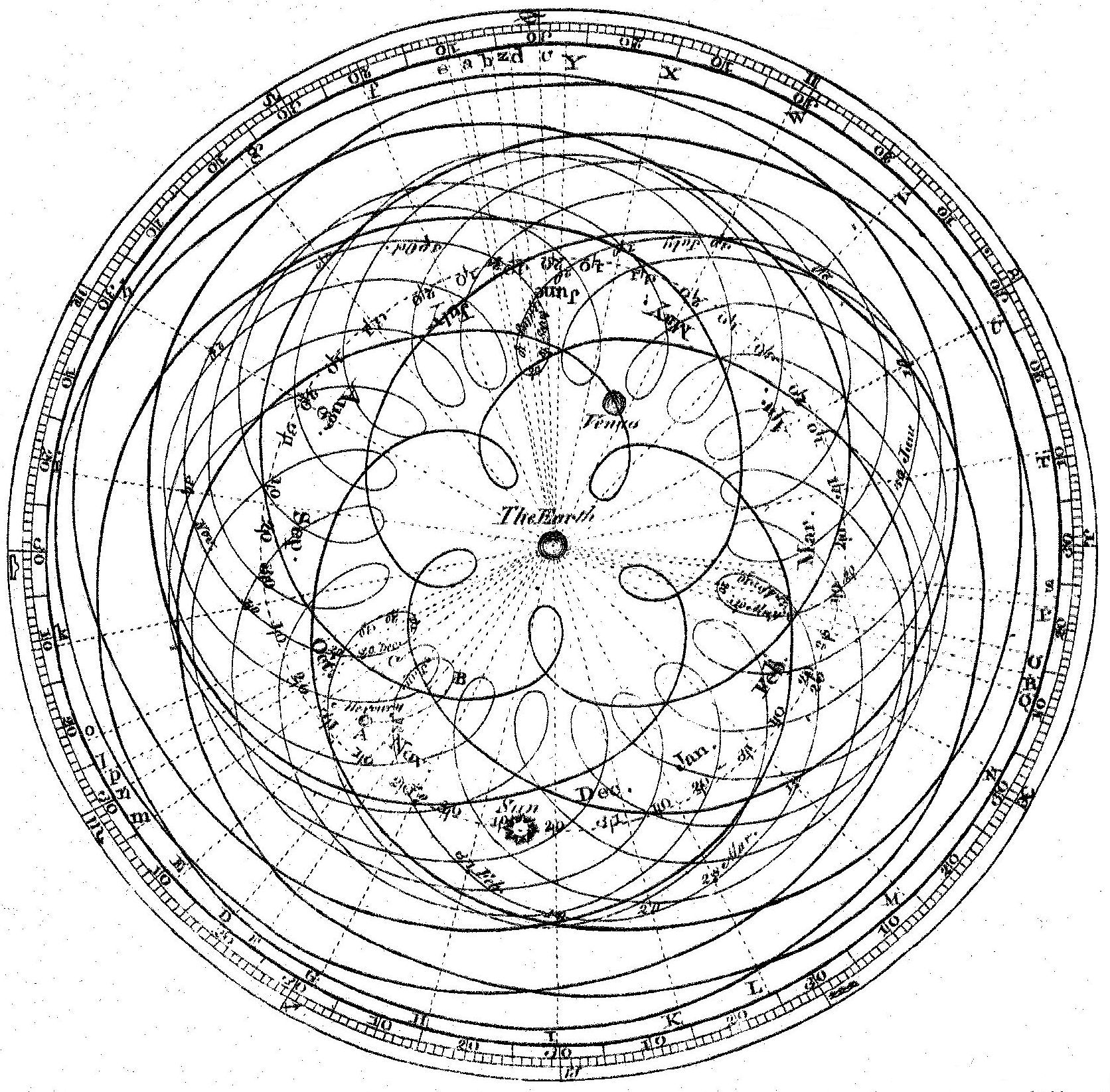
This story about medieval astronomy applies directly to investment strategies, market valuations, and portfolio construction today. It’s the same lesson –begin by questioning the very assumptions on which an entire system is built. There is also a very specific application of this model that is particularly current.

One of the most valuable lessons is to assume no knowledge and analyze closely every initial assumption. Nothing is so obvious that it can’t be questioned. Unexamined ideas and assumptions will eventually be useless. Any assumptions and any model used to explain and predict anything (whether it’s the movement of planets or financial markets) needs to go back to first principles and discard any assumptions, preconceived knowledge, or bias.

Stock Investment - Inflation, Predictions, Disruptions

Important and Unknowable

Economic predictions have always been highly variable and uncertain, and, for some reason, relied upon as if the future were a magical algorithm. Essentially, economists would make one fundamental mistake. They thought they were practicing a science. Data could be collected, inputted, and a predictive algorithm could be generated. Even Nobel Prize winners like Paul Samuelson believed that with enough data we could come to understand the economy and how it functioned.

This is nonsense. As Daniel Kahneman and Amos Tversky have shown us, human behavior and irrationality, combined with unpredictability and randomness (thank you Naseem Taleb) make this even a questionable social science. Using existing analysis and algorithms to reliably forecast is a fool’s errand, essential for someone’s tenure, and maybe even a Nobel Prize, but doesn’t add much that is useful. Some of the more laughable Nobel Prizes have been given to people who determined that markets were efficient. They are not. Economies can be predicted with useful data input. They cannot. A couple of inputs about inflation and the unemployment rate, and we know how to manage an economy. We can’t. That last one is the Philip’s Curve – true for a limited time and then it goes spectacularly wrong – a lot like most risk and market prediction models.