Brilliance combined with quirkiness and rule-breaking perpetuates an image of daring entrepreneurs and risk-taking capitalists generating outsized wealth. This simply doesn’t happen unless what is created matters. While we might question how much one needs to play a videogame or interact with social media, an advanced society needs advanced solutions to the intractable problems it faces. As John F. Kennedy said, “Our problems are man-made, mankind can solve them, as well.” Perhaps. The harsh reality is that brilliant, hard-working entrepreneurs and thoughtful investors lose much more often than they win. We need their risk-taking and willingness to lose. It’s how we win. We need the benefits technological innovation delivers even if we don’t understand that innovation’s ultimate purpose.
Innovation is unpredictable and astonishing – it can address the world’s most critical issues today, from hunger to efficient energy, to devastating diseases. It is also too often misguided, inefficient, and meaningless – creating nothing more than distractions and wastes of time cloaked in an image of technological wonder. Misguided and manipulative business plans sit side-by-side with the groundbreaking disruptions that may address society’s greatest problems.
Remarkable things can happen. Or not. Can we solve climate change, food shortage, limited healthcare, and other global stresses – all with TikTok videos? Innovation is unpredictable and astonishing – it can address the world’s most critical issues today, from hunger to efficient energy, to devastating diseases. It is also too often misguided, inefficient, and meaningless – creating nothing more than distractions and wastes of time cloaked in an image of technological wonder. Misguided and manipulative business plans sit alongside the groundbreaking disruptions that may address society’s most significant problems. We don’t have time. Even though there is no clear argument for resources going to a new video-sharing platform or immersive game, that is beside the point. Technology delivers something, nothing else can. It is the only way to find solutions to otherwise intractable and potentially devastating global crises. . The freedom to pursue solutions is the essential first step. Letting the best people do their best is still the best policy. It will also generate the best outcome.
The market is consensus thinking. Performing above average means being different. Simply being different doesn’t define success. Success means understanding what it takes to not only think differently but understand when consensus thinking is wrong and executing and implementing those choices effectively. Doing better (generating superior returns with less overall risk) is difficult. Understanding “what’s really going on” is not a simple formula. It requires different, deeper, and better thinking. Depart from the investment crowd, focus on the factors that are necessary and, in combination, sufficient to make a difference, sustain performance and manage risk. It’s not easy or obvious, but it is superior.
Let the data tell the story. Remove human bias. Intuitive investment ideas may seem compelling, but more often, these ideas are time-consuming, inefficient, and inferior.
Diverse thinking, innovative approaches, and a willingness to be wrong and start over typically bring superior results.
Trust the model. Data, discipline, and rigor win more often.
A new vision for artificial intelligence is using smaller more relevant data sets for dynamic learning generating more effective outcomes and better predictions.
This model uses cognitive architecture, learns, transfers learning, and retains knowledge – enabling more valuable and compelling artificial intelligence applications. This approach is more closely related to the brain’s actual structures and much more effective than “neural networks,” which is a catchy name but the similarity to the brain’s actual functioning is in name only. Real advancement in artificial intelligence must live in reality, not theoretical marketing.
The illusion that one can either predict or get ahead of cycles, or predict when they will end is why most investors underperform the market. Markets are driven by human emotion, and it is human emotion combined with the supply and demand dynamic that determines price. Therefore, pricing is independent of anyone’s perspective about “intrinsic value.” Markets are based on price, price is based on supply and demand, and that dynamic is subject to abrupt changes based on the whims of small numbers, and sometimes exceptionally large numbers, of investors. Human behavior controls the markets. Optimism, pessimism, psychology, fear, conviction, and resignation all play a role in adding to volatility and uncertainty. Frequent and intense volatility is here to stay. Market movements really can’t be predicted unless they are at extremes when prices are at absurd highs or lows. But, picking the high or the low is a fool’s errand. Understanding and profiting from volatility, managing risk, and believing in a sustainable investment model is still the best strategy.
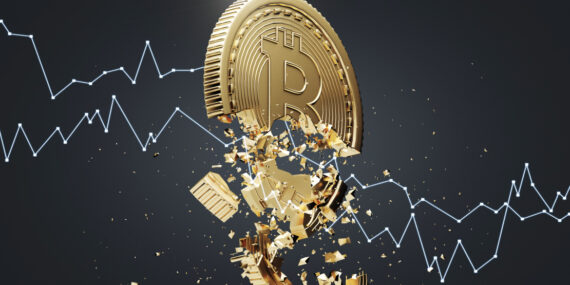
Cryptocurrency staying power has certainly been challenged these last few weeks. There is been a general market drop (even correction), but crypto has been collapsing in value and, to many, is in a death spiral. Of course, reality is more nuanced, and with more detailed analysis, a broad brush hardly seems appropriate. Certainly, the weakest and, honestly, craziest portions of the crypto world have been exposed to be nothing more than silliness. But some components remain resilient. The market is quite effective at sorting the specifics of an otherwise overgeneralized sector. There is no such thing as “crypto.” There are stable and valuable digital assets, globally exchangeable and disruptive. Others have nothing but fluff. Of course, government should insist on more reliable information, and institutions should guard more effectively against fraud. But, there is wheat among the chaff, and it continues to have the potential to be disruptive, create substantial value, and enhance global prosperity.
Transformation, or euphemistically, “disruption,” creates great opportunities to capture newly created wealth. But, as industries are transforming and strategic disruption is occurring, quite a lot of absurdity and certainly enough terror are associated with some of these extraordinary opportunities to require much greater analysis and understanding. There are extraordinary risks associated with anything disruptive and transformational. The first disruptor isn’t always the one who creates the most value or is even a sustainable competitive entity. Innovation does not mean competitive sustainability. Digital platforms, ranging from the internet to digital assets and cryptocurrency are transforming industries globally. But, along with that comes a lot of hyperbole and typically that is followed by very little substance. Great companies use technological disruption, innovation, and transformation to establish themselves and thrive. But they rarely last. Every company, even the most valuable companies such as Apple, Apple, Amazon, Facebook, Netflix, etc. must dynamically transform to stay competitive and valuable. Transformations are certain. New entities will become very valuable, legacy companies will diminish, and a handful will transform and thrive. Transformation and sustainability create and capture great wealth, but are far more challenging to identify, and even more challenging to sustain.
The show analyzes emerging economic and social developments, identifying the most critical issues impacting investment success. It looks at globally disruptive changes and strategies to profit from these new market forces. Innovation, advanced technologies, geopolitics, and new interrelated factors are essential components of future investment success. Investment success combines predicting the future, the confidence to make bold choices, and the fortitude to stay with those choices. Today’s volatile and uncertain world requires new knowledge and perspective and assembling relevant facts from many diverse sources to make better decisions and achieve superior returns. Some of the world’s most important industries are being profoundly impacted by new technological innovations and platforms, such as artificial intelligence, digital assets, blockchain-based businesses, gene editing, and DNA sequencing, enabling unprecedented disruption to business and economic models. Stable predictability is increasingly anachronistic. Every company or industry will either be a disrupter or disrupted. The leading growth companies of today stand an excellent chance to be memories tomorrow.