Inflation

Folly and the Fed

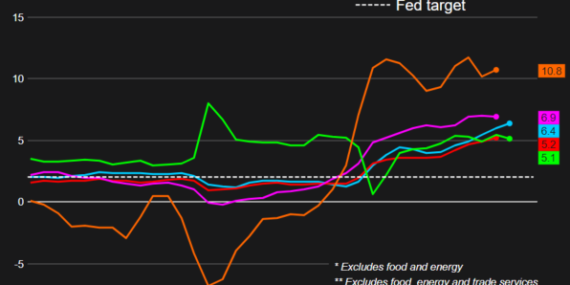
The average prices of food and fuel rose more than 16% in February from a year earlier and are expected to rise further by the war in Ukraine. Consumers are paying much more for meat, bread, milk, shelter, gas, and utilities. Only a small amount of food consumed in the U.S. is imported, and most of that is from Mexico and Canada. But Russia provides 15% of the world’s fertilizer and other agricultural chemicals that are now in short supply as planting season approaches. Wheat futures are up 29% since Feb. 25 and corn is up 15%. There is no shortage of wheat in the U.S., but global supply was the tightest in 14 years before the conflict, and dramatic shortages and price spikes are expected. What data is the Fed looking at, and how is it assessing inflationary risks? It’s hard to feel confident that the right hands are on the wheel because the combination of extraordinary factors, such as extremely tight labor markets and wage inflation (at over 6% annually and accelerating) showed inflation was already a significant risk. Yet interest rates were left unaltered. This is even before the crisis in Ukraine. The Fed should do whatever is necessary with interest rates to bring down inflation, including movements of more than a quarter-point, and a rapid reduction of its balance sheet. It also means recognizing that unemployment is likely to rise over the next couple of years. Paul Volcker would not have had to take extraordinary steps, driving the economy into a recession to crush runaway inflation, if his predecessors had not lost their focus on inflation. To avoid stagflation and the associated loss of public confidence in our economy today, the Fed has to do more than merely adjust its policy dials — it will have to head in a dramatically different direction.

Commodities

Commodities and Crisis

Beyond 2022, higher interest rates and slower global growth most likely trigger a market correction, perhaps at an exorbitant cost. As discounts rates rise and growth assumptions lower, many stocks based assumptions that low interest rates and high growth would sustain for many years will see dramatic repricing and much lower valuations.
Energy and commodities, and the businesses associated with them, are in for a very bumpy ride, but there is a fundamental sustainability to their cash flow and long-term attractiveness as world supply reorders. That which is essential prevails.
The luxury of thinking we have halcyon days of global growth and geopolitical stability may not be with us for some time to come. It is perhaps time to plan for that now.

Too Clever by Half

Too Clever by Half

Investment models that account for uncertainty, volatility, and failure succeed in the long term.

Events in Ukraine, oil and natural gas markets, commodities, supply chain disruption, and spiking inflation highlight that, while none of these were predictable, all represent increasing uncertainty permeating all markets. The pandemic and war in Ukraine were unforeseen, but that’s just the point, unforeseen events will occur. It is a waste of time to try to predict the specifics, it is an essential investment strategy to manage risk to not only withstand but profit from “certain uncertainty.”

Irrationality, not only in human behavior (with unfortunate, often tragic results) but market movements, investment volatility, and bewildering prices, is another certainty. “Mr. Market” as Benjamin Graham said, “is an irrational schizophrenic.” Investing as if he is not assures an investment strategy that will ultimately fail.

Uncertainty

Too Clever by Half

Investment models that account for uncertainty, volatility, and failure succeed in the long term. Events in Ukraine, oil and natural gas markets, commodities, supply chain disruption, and spiking inflation highlight that, while none of these were predictable, all represent increasing uncertainty permeating all markets. The pandemic and war in Ukraine were unforeseen, but that’s just the point, unforeseen events will occur. It is a waste of time to try to predict the specifics, it is an essential investment strategy to manage risk to not only withstand but profit from “certain uncertainty.” Irrationality, not only in human behavior (with unfortunate, often tragic results) but market movements, investment volatility, and bewildering prices, is another certainty. “Mr. Market” as Benjamin Graham said, “is an irrational schizophrenic.” Investing as if he is not assures an investment strategy that will ultimately fail. An increasing number of growth and momentum investment funds are shutting down after sustaining significant losses recently, a sign of the severe pain the selloff in growth stocks is inflicting. More importantly, it signals an inability for investment funds to manage risk and understand that markets and investments do not move in a singular direction for long, and the correction is sudden and painful – regardless of how compelling “momentum” may seem. Risk management is the key to investment sustainability, but this seems to go ignored among most investment professionals. Frequent and extreme volatility is here to stay, and that is likely to decimate growth and momentum funds, as well as highly leveraged equity investment funds (from LTCM in 1998 to Archegos in 2021, the lesson is never learned for long – and there will be more examples to come). Clear and coherent markets, free from political agenda, bad compromises, and ineffective regulation are almost nonexistent. The consequences continue to be pyrotechnic.

Dramatic Consequences

The World’s Chess Game

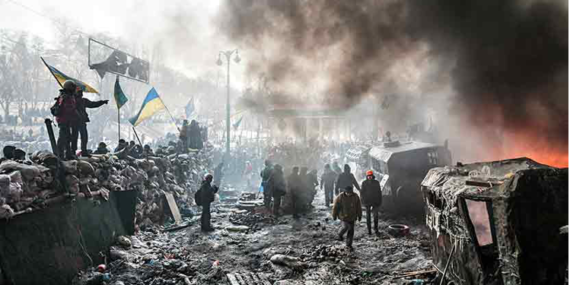
The breadth of the economic and market impact will depend on what types of sanctions are applied by the West. It’s likely such measures would further target a combination of Russian banks, investment, and trade (such as through barring Russia from the cross-border SWIFT network), and potentially, energy. In response, Putin could also retaliate through the energy sector, as well as through cyberattacks on the United States and Europe. The situation is fluid to say the least. I approach these things thinking like a chess player. What is my opponents to best move? What is my best move, or least worst move, in response? And so on… the whole board not only includes Ukraine, but also Estonia, Latvia, and Lithuania, as well as China and Taiwan. If the West is unwilling to do anything meaningful except give passionate speeches, that is definitely a cue for China to be more aggressive.

Learning

Remembrance of Things Past – Liquidity, Stability, and Predictability

Financial markets are imbalanced and lack liquidity in crucial sectors, even historically stable and predictable markets such as the global bond and currency markets. Investments are slanted in one direction more frequently and the markets are vulnerable to big price swings as a result. These large global markets are not immune to ever more lopsided trades creating extreme volatility. This occurs even when a small change occurs in positions, sentiment, or news. Even the world’s most liquid markets, US dollar currency trades and US Treasuries, are seeing skewed positioning resulting in surprisingly large shifts in prices and Treasury bond yields.

The market now leans too far one way or the other, and that imbalance will be forced to reverse more powerfully and unpredictably.

Innovation

Stupidity and Misery by Another Name

A National Investment Authority, an idea gaining traction among the administration, would be responsible for “devising, financing, and executing a long-term national strategy of economic development and reconstruction.”

This is not the job of a government; this is the role of the free market. The market does this quite well, and government does this quite poorly. An NIA is another way to bring misery and inefficiency.

Policy reflective of central planning, socialism, or industrial policy brings misery to all. This discredited philosophy that tortured so many in Eastern Europe and Soviet Russia seems to be getting more traction today bewilderingly. It leads to nothing more than bureaucratic idiocy, waste, and disregard for any consumer needs.