Technological, geopolitical, and capital transformation are interconnected, with unprecedented impacts on a globally connected, directly entangled economic and geopolitical world. Choices are simultaneously investment decisions, national security decisions, and civilizational bets on which technological architecture will define the next century.
Understanding them requires insightful economic, strategic, and institutional thinking. More than ever, it requires intellectual courage and patience with complexity.
Albert Camus’s warning from nearly 80 years ago, that humanity is subordinate to abstraction, people are replaced by calculations, and the willingness to accept suffering as an administrative variable persists. We have industrialized the human crisis. We are at an inflection point where the consequences of our choices, both good and bad, will arrive faster, hit harder, and spread more widely than any prior moment in history. We have the proven capacity to recover from previous crisis. The question is whether the next crises potentially makes recovery impossible.
Markets destroy the comfortable assumption that tomorrow behaves like yesterday. They reward those who can identify when the system’s structure changes and punish those who try to fit new realities into old frameworks.
That is why the conventional idea of “what something is worth” has become less relevant than how systems evolve. Investors who cling to formulas intended for stable conditions will always be surprised by nonlinear disruption.
Nowhere is this more obvious than in AI and energy, where the variables are not just changing; the equations themselves are being rewritten.
The US’s competitive advantage was developing the world’s best educational system, initiating innovative research and development, welcoming the world’s best students to thrive in an unrestricted environment, and accessing unique forms of capital for entrepreneurial ideas. The unique environment that combined academia and entrepreneurship, as seen at places like Bell Labs and Fairchild Semiconductor, was the spark that ignited Silicon Valley, the Life Sciences Corridor, the Innovation District, and the Research Triangle, among others, creating an unprecedented entrepreneurial environment and economic engine. This drove economic growth, disruptive innovation, and greater prosperity. This created a virtuous cycle that enhanced national wealth and economic opportunity. We are undermining all these advantages. The next 20 years will be defined by choices made today. Talent, energy, and technological innovation build the foundation for prosperity. Undermine them, and you guarantee decline.
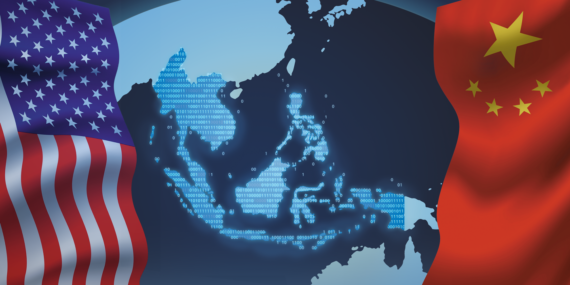
The United States and China play global economic and political chess games. There are numerous moves and defensive and offensive strategies, not only for trade but also for energy and natural resources (rare earths, among the most recent sources of discord), geopolitics (Russia, Ukraine, Iran, and the Middle East generally), technology (Taiwan and AI), and global economic supremacy. It’s a long list, but China and the US drive the outcomes. Let’s be clear, Apple designed the iPhone, but it was China’s manufacturing workforce that made it a global phenomenon. China’s millions of engineers and factory workers accumulate practical hands-on knowledge from experience that cannot be easily transferred. This sustainable advantage creates new industries, including electric vehicles, drones, and alternative energy, with world-leading expertise. In the meantime, America’s engineering expertise has been hollowed out. It is naïve to imagine wrestling China back to the past. The project, now, is to contest its moral vision of the future. Connected, collaborative engagement is the only practical way. China has come a long way, and its trajectory cannot be ignored or dismissed. The U.S. and China will be much better off from this more enlightened, realistic perspective.
The global investment landscape has reached a structural inflection point. Geopolitical realignments, industrial policy, and national security concerns are reshaping the era of frictionless globalization. At the center of this transformation is the intensifying strategic competition between the United States and China.
The US is acting belligerently toward China in trade negotiations, threatening exorbitant tariff rates and trying to build walls around China’s international trade activity. All this may be a high-volume attempt to bring China to the table to strike a better trade arrangement. While this tactic is unprecedented, we may only be in the third inning of a nine-inning game. The current geopolitical and economic transition is both a challenge and a multi-decade opportunity. Capital will increasingly flow to regions that demonstrate policy consistency, innovation capacity, and demographic vibrancy. Strategic sectors such as AI, defense, semiconductors, energy, digital infrastructure, and cybersecurity will drive private and public investment.
Embracing this new reality of regional diversification, thematic depth, and geopolitical foresight will position participants to thrive.
As multipolarity replaces global uniformity, success lies with active, strategic alignment with the forces shaping the next economic era.